
As we approach the end of another school year, I know students are starting to wind down. Assessments are being completed, holidays are getting closer and the excitement of finishing the school year is definitely building!
But I want to remind students (and parents!) of something important: English is a subject where consistency really matters.
One of the things I notice as an English tutor is that students can make wonderful progress throughout the year, only to lose some of that momentum when they stop practising regularly.
Reading, writing, comprehension and vocabulary are skills that need to be developed and maintained. You wouldn't expect to improve at a sport without practising, and English is no different.
1. Keep reading – even if it's just a little each day.

I know getting students to read can sometimes feel like an uphill battle!
However, regular reading is one of the simplest ways to improve English skills. It exposes students to new vocabulary, different sentence structures, interesting ideas and a variety of writing styles.
It doesn't have to be a lengthy novel. A short story, an interesting news article or even a few pages of a book each day can make a difference.
The important thing is to keep reading.

2. Don't switch off in the classroom.
The last few weeks of school can sometimes be challenging. Students are tired, teachers are winding down and there are plenty of distractions.
However, the activities completed in these final weeks are still valuable.
Whether students are analysing a poem, completing comprehension questions, exploring persuasive techniques or writing creatively, they are continuing to develop skills that will be important next year.
Don't fall into the trap of thinking that because the year is nearly over, the learning no longer matters!
3. Keep writing!
Writing is one of those skills that can become rusty surprisingly quickly when students don't practise.
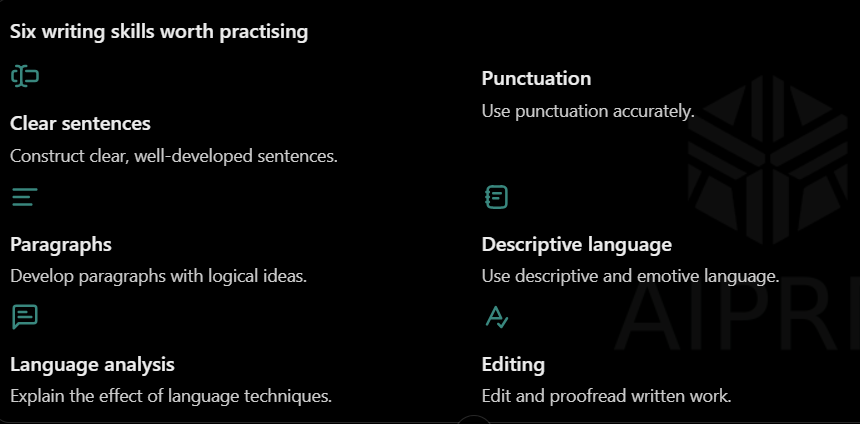
I encourage students to continue working on the fundamentals:
Constructing clear, well-developed sentences.
Using punctuation accurately.
Developing paragraphs with logical ideas.
Incorporating descriptive and emotive language.
Explaining the effect of language techniques.
Editing and proofreading their work.
You don't need to write a full essay every week. Even a short creative writing activity or analytical paragraph can help maintain these skills.

4. Go back and revisit the tricky bits.
We all have areas of English that we find more challenging.
Perhaps you struggle with inferential comprehension, identifying language techniques, explaining quotations or structuring an analytical paragraph.
Rather than simply moving on to the next topic, take some time to revisit these areas.
Building strong foundations now will make next year's learning much easier.
5. Think about the year ahead.

As students progress through Years 7–10, the expectations in English gradually increase.
Students are expected to move beyond simply identifying techniques or retelling a story. They need to explain how composers communicate ideas, analyse language choices, and develop their own sophisticated written responses.
These skills take time to develop. They don't suddenly appear when students reach Year 10 or Year 11!
A final reminder
〰️
A final reminder 〰️
I certainly don't expect students to spend their entire holidays studying. Everyone deserves a break!
However, maintaining some connection with English through reading, writing and engaging with interesting texts is a great way to avoid losing the progress you've made throughout the year.
My advice? Don't completely switch off just yet.