
Acing the Reading Test in the NSW Selective Schools Test.

Over the years, I have worked with many capable students who find the Reading section of the NSW Selective High School Placement Test surprisingly difficult.
Often, it is not because they cannot read well. In fact, many of these children are strong readers. The challenge is that the test asks them to read unfamiliar texts, interpret subtle ideas and make careful decisions—all while watching the clock.

The current Reading test gives students 45 minutes to provide 38 answers across 17 questions. It includes a variety of fiction and non-fiction texts, such as poetry, book extracts, reports and magazine articles. Students read the texts on a computer screen, which adds another layer to the challenge.
Learn to look beyond the obvious

I regularly remind my students: Do not just ask what the text says. Ask what it suggests.
One of the biggest mistakes I see is students choosing the answer that simply repeats a word or phrase from the passage. It looks familiar, so it feels correct.
What the text says → What the text suggests → Inference
〰️
What the text says → What the text suggests → Inference 〰️
However, selective test questions frequently require students to infer. This means using clues in the text to understand something the writer has suggested without stating it directly.
For example, a character may insist that they are “fine”, yet avoid eye contact, speak abruptly and leave the room. A strong reader recognises that the character’s actions are more revealing than the word “fine”.
I regularly remind my students: Do not just ask what the text says. Ask what it suggests.
Make sure every answer can be proven
When students are torn between two options, I ask them a simple question:

Which answer can you prove using the text?
A correct answer should be supported by a particular word, image, detail or change in tone. An answer may sound sensible, but if the passage does not support it, it is probably not the best choice.
This is one of the most valuable habits a student can develop. It replaces guessing with evidence.
Read a wide variety of texts
Some children read novels enthusiastically but struggle with poetry. Others understand factual articles but become confused when a narrator is unreliable or a writer uses humour and irony.
Preparation should therefore include more than completing endless practice tests. Students need experience with:

fiction and non-fiction
poetry
persuasive and informative writing
older and more complex vocabulary
texts with implied meanings
paired or related passages
The wider a child’s reading experience is, the less intimidating an unfamiliar text becomes.
Practise working under time pressure
Reading carefully is important, but so is moving efficiently.
Some students spend far too long on one difficult question and then rush through several questions they could have answered correctly. Others race from the beginning and make avoidable mistakes.

Timed practice helps students find the balance. I usually encourage students to keep moving, select the strongest answer they can and return to difficult questions if time allows.
Most importantly, students should attempt every question. The official practice paper states that marks are not deducted for incorrect answers, so leaving an answer blank offers no advantage.
Analyse mistakes properly
Completing a practice paper is only the beginning. The real learning happens afterwards.
When reviewing an incorrect answer, students should ask:
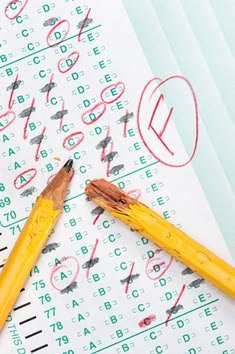
What did I misunderstand?
Which clue did I miss?
Why was my chosen answer tempting?
What makes the correct answer stronger?
Is this a type of question I often get wrong?
I have seen students complete test after test without improving because they only check their scores. A score tells us how a student performed; it does not teach them what to do differently next time.
Confidence matters too
Many children approach the Selective test feeling that every question is designed to trick them. This can lead to panic, second-guessing and changing correct answers unnecessarily.

I want students to take the test seriously, but I also want them to trust the skills they have developed. They do not need to understand every unfamiliar word or feel completely certain about every answer. They need to remain calm, look for evidence and make the best decision available.
Acing the Reading test is not about finding a secret trick. It comes from learning to read beneath the surface, supporting answers with evidence and practising thoughtfully.
My final advice to students is always the same:
